

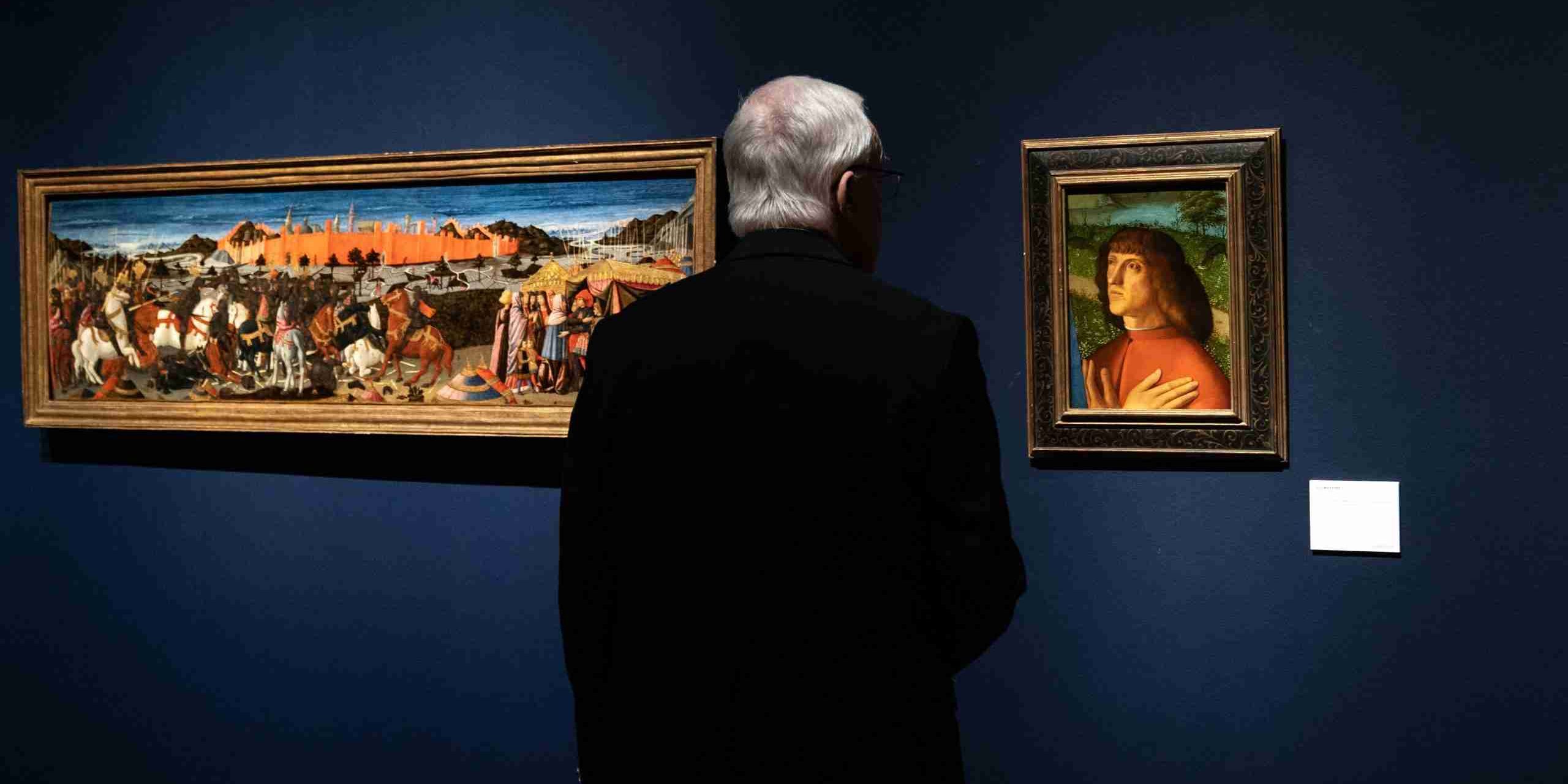
By Mary Kawano, I-OnAsia’s Legal, Compliance & Due Diligence Analyst
Sometimes, clients ask our I-OnAsia team about an event in the news, such as the recent theft at the Louvre, and when we tell them of a related success in over 25 years in business, the response is a surprised: “I didn’t know you did that!”. So, in this Capability Corner article we discuss the issues and challenges, and spotlight how I-OnAsia’s Art Provenance & Risk Assessment checks are used in some pre-IPO and investment situations involving the art world, and how these checks are also used by buyers concerned about financial and reputational losses, and for asset tracing.
This month’s brazen theft of France’s crown jewels from the Louvre has drawn the public’s attention back to a dark reality: stolen art and smuggled antiquities are prized assets for hardened criminals, white-collar money launderers, and deviant collectors.
There is hope French authorities will achieve a full recovery, especially after arrests have been made. If not, they will join the more than one million lost and stolen art items being tracked globally.
Sophisticated diligence clients know the harsh truth: “buyer beware” applies doubly for the art market. Not only could you lose your investment—you could lose your reputation, or even wind up in jail.
Conversely savvy litigation support clients appreciate the reality: assets might not be in offshore accounts, they might be hiding in plain sight on the wall of an investigative target.
To address these challenges, I-OnAsia capabilities include targeted compliance database checks and very sophisticated searches, which we call the Art Provenance & Risk Assessment Option package (below).
The Louvre: Problematic Provenance
This October, akin to an Ocean’s movie, the Louvre Museum in Paris was the target of an audacious and professional daylight robbery. Thieves used a basket lift to get onto a balcony, forced open a window with an angle grinder, stole priceless jewellery once owned by Emperor Napoleon and his relatives, then sped away on scooters. The entire operation only took 7 minutes.
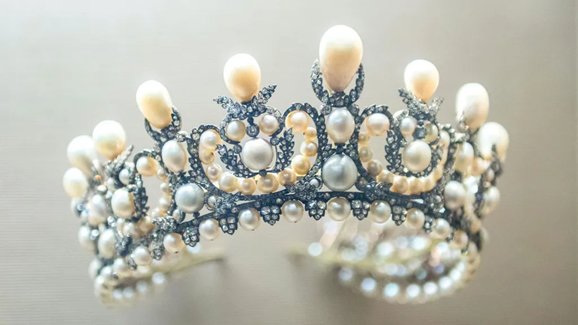
Photo courtesy of Alamy. Empress Eugenie’s tiara, stolen during the Louvre robbery.
But the Louvre is home to other stories about the deep-rooted risks in the art market. Former Louvre President and Director, Jean-Luc Martinez, was indicted on charges related to antiquities trafficking and money laundering concerning Egyptian artefacts sold to the Louvre Abu Dhabi, such as a stele associated with the well-known Pharaoh Tutankhamun. The stele was attributed to the collection of one German sailor, “Johannes Behrens”, but Behrens was likely a fiction! Nearly all art and artifacts once associated with Behrens are now considered looted, with many being returned to their country of origin. Martinez “closed his eyes” to provenance irregularities despite red flags, allowing illicit antiquities to be laundered into one of the world’s most important museums.
Both the recent theft and the Martinez case are proof that “unsellable” items can still circulate in underground markets.
Scale & Scope: Being Up to Date Matters
The global art market, valued at over US$57.5 billion as of 2024, is a vibrant and fast-moving ecosystem characterised by rapid turnover, complex ownership structures, and an expanding digital footprint.
The art market’s transactional turnover continues to accelerate at a breakneck speed. While total sales value declined 12% in 2024, transaction volumes rose by 3%, driven by increased activity, specifically, from the lower-value segment. Coming in hot is the rise of digital auctions, further muddying the waters.
The stakes are often very high. It is not uncommon to see high-value lots fetching eye-watering prices, such as in May 2025 at Christie’s New York: a Monet painting sold for almost US$48 million, a Rothko for US$43 million, and a Picasso for US$35 million.
Many auction houses have compliance teams that protect against offerings of stolen or looted art, but not every seller takes the same position, as was seen recently with the controversial auction of a Qing Dynasty Chinese five-panel screen. No buyer should rely solely on any seller’s claims. Background checks are a crucial safeguard for buyers, dealers, museums, and insurers.
In the current world of porous borders for assets, emerging geopolitical risks, and increasingly sophisticated concealment and sale efforts, the scope of checks must be global.
In a University of New Mexico museum, the FBI recovered two stolen paintings tied to a web of art theft, highlighting ongoing challenges in tracking provenance. Over 12,000 kilometres away, following the regime collapse in Syria, a significant collection of valuable artworks (suspected to be acquired illegally) was found in Bashar al-Assad’s house. Down in Southeast Asia, from the downfall of the dictatorship of Ferdinand Marcos in the 80s, they found more than just the 3000 pairs of shoes his wife owned—as recently as April 2025, art and jewelry paid for by their embezzlements are still being recovered from the family’s coffers, the amount of which was enough to curate an exhibit for a portion of the 500 or so pieces. There is also the long-drawn hunt for the masterpieces looted by the Nazis, with works found littered across the globe.

Raphael, Portrait Of A Young Man, 1513-1514. Stolen by Nazis in WWII. It is still missing.
In January 2024, the UK National Crime Agency (NCA) issued an amber alert about sanctioned individuals exploiting the art market, especially those subject to sanctions imposed on Russia. The alert emphasised that, among other methods, criminals are likely to use legitimate transactions in activity to obscure proceeds or assets subject to sanctions. This was further amplified in June 2025 when the UK Office of Financial Sanctions Implementation (OFSI) released a threat assessment urging art market participants (AMPs) and high-value dealers (HVDs) to enhance reporting and compliance efforts.
Interpol, the US Federal Bureau of Investigations, China’s Ministry of Public Security and National Cultural Heritage Administration, Hong Kong’s Customs & Excise Department, the UK National Crime Agency and many more agencies are actively investigating developments as they arise.
Corporate: Pre-IPO & Pre-Investment Due Diligence
I-OnAsia frequently conducts due diligence on companies and their directors and officers. Sometimes our subjects are in the art world. In 2025, for example, I-OnAsia completed global checks as a part of the due diligence review in advance of an investment by our client into an auction house.
Mindful of all the potential risks associated with the black market and provenance, I-OnAsia has invested in specialized compliance check capabilities to support the due diligence process. These tailored options are outlined below.
Art Provenance & Risk Assessment Option
Suitable for pre-IPO due diligence on companies and executives in the art industry, this option may be utilized to reduce risk of financial and reputational loss for provenance checks by clients investing in art. The services under this option can also serve as an effective litigation support tool for asset traces and money laundering inquiries. It includes:
- Comprehensive searches of global and specialized art loss registers, covering over one million items, including antiquities and Asian art, for matches with observed art owned/controlled by a subject of inquiry;
- Searches of online chat rooms of citizen-activists for stolen and smuggled art;
- Cross checks of constantly updating regulatory sanctions by departments responsible for national protection of cultural relics;
- Media searches for descriptions of items;
- Advanced AI-enabled image match searches between an identified item controlled by a subject and stolen and smuggled items.
Add-on services include undercover site visits and virtual and in-person secret shopper visits to uncover additional details.
Checks are performed by experienced researchers and analysts in our offices in Hong Kong, London, and New York.
Who do our compliance specialists serve? Our Hong Kong, London, and New York teams at I-OnAsia work with auction house compliance officers, private bank art advisory specialists, venture capital compliance managers, and wealth management firms operating across these three financial centers. These institutions navigate a global art market where approximately $3 billion in annual transactions are linked to suspicious activities, according to the United Nations Office on Drugs and Crime.
What makes art market compliance uniquely challenging? The Financial Crime Academy reports that only 25-30% of art transactions occur through regulated banking channels, creating what the Harvard Art Law Organization describes as “arbitrary art pricing, combined with the prevailing culture of secrecy in the industry, [offering] maximum opportunity for manipulation”. I-OnAsia understands these issues, and uses best-in-class tools to support client programs. AML Watcher notes that compliance officers face the core challenge of verifying beneficial ownership when “transactions are mostly carried out with the assistance of third parties or shell companies”. I-OnAsia’s relationship mapping tools are utilized, drawing from a comprehensive list of databases.
What specific compliance services do we provide? I-OnAsia delivers enhanced due diligence (EDD) on high-value acquisitions above the €10,000 threshold mandated by EU 5th Anti-Money Laundering Directive (5AMLD), beneficial ownership verification through shell company structures, politically exposed persons (PEP) screening, and sanctions screening against global databases including the FBI’s National Stolen Art File, and other databases. (The FBI has recovered over 20,000 stolen items valued at more than US$1 billion since 2004.)
How do we support regulatory compliance? For compliance officers managing UK Money Laundering Regulations and the proposed U.S. Art Market Integrity Act—which, as outlined in a DLA Piper analysis, would require auction houses to establish “robust AML/CFT controls and impose significant reporting obligations,” — I-OnAsia background checks deliver provenance verification, reputational risk assessments for pre-IPO due diligence on art sector businesses, art-backed lending compliance reviews for loans at typical 40-60% loan-to-value ratios, and investment committee advisory across compliance-critical functions including Know Your Customer (KYC), Customer Due Diligence (CDD), Suspicious Activity Reports (SARs), and ultimate beneficial owner (UBO) identification.
UHNW: Due Diligence & Securing Custody
Ultra-High-Net-Worth (UHNW) families trust I-OnAsia to run a hybrid of these searches focused on specific works. In a 2024 project, I-OnAsia researched an individual proposing to sell a set of collectables. We researched the background of the pieces and the subject’s history, undertaking deep relationship mapping to identify dealers in their network and then reviewing past auctions to determine chain of custody. I-OnAsia also provided advice on how to secure the transport of the collectables to the client’s residence.
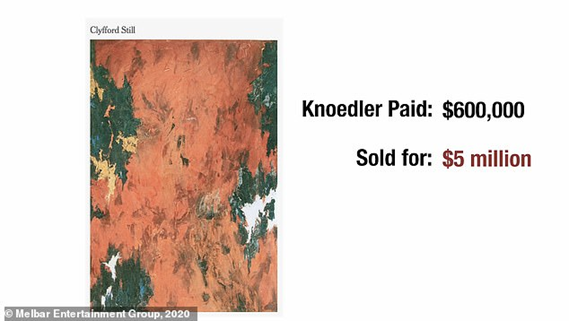
A counterfeit Clyfford Still (1904-1980) painting sold in the Knoedler Gallery, as explained below.
What due diligence do UHNW collectors need on art dealers and advisors? In an art market where fraud is the #1 concern among collectors according to Chubb’s 2024 Wealth Report, recent high-profile cases underscore the stakes: Lisa Schiff’s $6.4 million fraud scheme targeting UHNW clients including Leonardo DiCaprio (2.5 years prison, 2025), Knoedler Gallery’s $80 million in fake Abstract Expressionist works sold over 15 years, Salander-O’Reilly Gallery’s $120 million fraud that defrauded Robert De Niro and other collectors, and Russian billionaire Dmitriy Rybolovlev’s $380 million lawsuit against Sotheby’s alleging collusion with his advisor Yves Bouvier in overcharging for $2 billion in art purchases. As a peer investigations firm emphasizes, “retaining an investigations firm to conduct high-level background checks—with a focus on the veracity of employment history and potential conflicts of interest, claimed credentials, and the presence of litigation and reputationally damaging press—can help a diligent buyer mitigate risk”.
Why is seller and intermediary vetting critical for family offices? As Basler Registrar notes, “to protect yourself, your reputation, your bank account and your collection in this unregulated art market you need to perform your own due diligence”. SET Advisory observes that “while much attention is often placed on the authenticity of the artwork itself, the credibility and background of the individuals or entities involved in the transaction can be just as important”. Art law attorney Scott Hodes recalls that, before Lawrence Salander’s conviction, “there were a lot of people who questioned Larry Salander’s lavish lifestyle and wondered if his claims about what he had sold and for how much were really true”. These are red flags that I-OnAsia’s comprehensive background checks can reveal.
What specific investigations do we conduct on art market participants? Our Hong Kong, London, and New York teams perform forensic background checks on art dealers, galleries, advisors, and auction house specialists including:
- verification of employment history and educational qualifications (identifying exaggerations or gaps),
- adverse media searches spanning decades of press coverage, comprehensive litigation searches revealing lawsuits related to forgery and business disputes,
- financial health assessments through liens, bankruptcy filings, and asset verification (property, luxury vehicles, aircraft, watercraft holdings),
- conflicts of interest analysis identifying undisclosed commissions or dual representation violations, and
- compliance screening including OFAC sanctions, Politically Exposed Persons (PEPs), National Sex Offender Registry, and AML/KYC verification.
As Responsible Art Market guidelines state, “intermediaries face conflicts of interest first and foremost when they fail to delineate clearly to their clients…the role they are performing and the basis of their remuneration”, requiring family office managers to independently verify that advisors—who New York art advisor Todd Levin notes should “act as fiduciaries” for clients—are not receiving undisclosed kickbacks or representing both buyer and seller in the same transaction.
Why is art transport and storage a critical concern for UHNW collectors and family offices? Within the $2 trillion global art and collectibles market, art remains most vulnerable during transit, where standard carrier insurance provides only $100-$200 coverage for a $100,000 sculpture based on weight rather than value—leaving collectors catastrophically underinsured, a concern shared by 62% of UHNW individuals according to Chubb. As Bank of America Private Bank’s Family Office Solutions head Elizabeth Thiessen observes, “It’s vital to bring a similar level of planning and strategy to art and collectibles as you do for other asset classes”, yet many families struggle when art is “hanging in multiple homes, on the walls of their kids’ homes or on loan to arts organizations—it’s easy to lose track of where everything is”. I-OnAsia provides advice on these issues to UHNW collectors and family offices.
What storage and security standards should wealth advisers recommend? I-OnAsia specialists advise UHNW clients on security and background of third-party facilities, and can support vetting of climate-controlled facilities with 24/7 UL-listed central monitoring stations, motion detectors, fire suppression systems without water sprinklers (which damage artworks), elevated rack systems preventing flood damage, and professionally trained art handlers.
Following the October 2025 Louvre robbery, Department of Homeland Security expert Jim Hayes emphasizes that “venues should be reviewing locks and access controls for all possible entry and exit points” and implementing “identification credentialing and badging to ensure that only those who should have access to secure areas… can access them”.
How does insurance inadequacy affect family office portfolios? Fine art insurance premiums reached $5.56 billion in 2023 and are projected to reach $6.73 billion by 2032 (4.34% CAGR), yet inflation impacts of 11.1% rapidly increase artwork values and render previous valuations inadequate. Bank of America’s Joshua Rief notes that families often maintain “digital spreadsheets, handwritten ledgers or other kinds of record-keeping that fail to account for the entire collection”, creating exposure when collections are scattered across Hong Kong, London, New York, and other global properties.
I-OnAsia provides guidance on specialized collection audits and secure transit coverage protecting nail-to-nail from origin to destination across land, air, and sea transport, warehouse storage during transit, and multi-residence deliveries—addressing what FFI Practitioner describes as the reality that “too many collectors keep the current inventory of items in their heads” with “appraisals for insurance purposes [that] often lack critical information or are out of date”.
Legal: Asset Traces
I-OnAsia assists counsel with asset traces globally. We access comprehensive global databases and utilize the same unique tracing technologies used by law enforcement agencies to uncover hidden assets. In a 2025 project, I-OnAsia traced a set of antiques that had been purchased by the manager of a family trust. The seller on record was a friend of the manager, and we determined that the items had not been sold at a fair value. Using intelligence gathered by I-OnAsia, our client ultimately proved that the manager had been defrauding the family, pocketing gains with his friend.
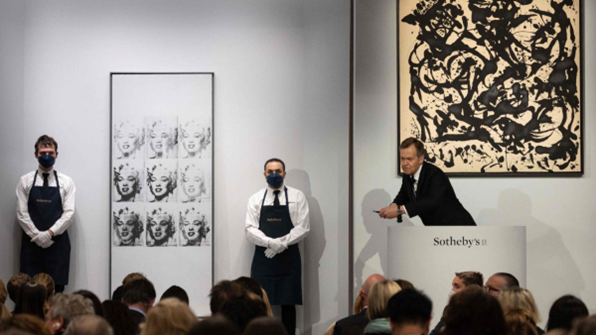
Sotheby’s auction of Andy Warhol’s Nine Marilyns, 1962, which formed part of the Macklowe Collection, as explained below.
How do judgment creditors and divorce attorneys locate hidden art assets? For lawyers pursuing asset recovery across Hong Kong, London, and New York, I-OnAsia provides the forensic intelligence supporting urgent court applications for Mareva injunctions (Hong Kong), freezing orders (UK), and information subpoenas with restraining notices (New York) before debtors move artwork overnight across jurisdictions. As the Fourth Circuit Court of Appeals recognized, “the government’s ability to collect on a judgment often far surpasses that of an untutored or impecunious victim of crime…realistically, a victim’s hope of getting paid may rest on [superior] ability to collect and liquidate a defendant’s assets”, equally applicable to private judgment enforcement where sophisticated asset tracing proves critical.
What does successful art asset liquidation look like? The Lisa Schiff case exemplifies comprehensive recovery: assignee attorney Douglas J. Pick identified and liquidated 231 artworks valued at $1.09-$1.59 million through Phillips auction house to satisfy her $6.4 million fraud judgment (30 months prison, March 2025) involving high-profile victims including Leonardo DiCaprio.
Our I-OnAsia investigators can conduct forensic searches like those that that uncovered assets in landmark cases: the Macklowe divorce ($500+ million art collection court-ordered divided), Salander-O’Reilly liquidation ($120 million fraud, art seized to repay Robert De Niro and other victims), and Ace Gallery bankruptcy ($230,000+ art inventory sold). Such investigations typically encompass gallery purchase records, auction house consignment databases (Sotheby’s, Christie’s, Phillips), art storage facility contracts (Crozier, UOVO, Momart), museum loan disclosures, insurance appraisal reports, social media and online evidence such as Instagram posts and online property listings showing artworks in debtor’s possession, and financial transaction tracing to dealers.
What legal tools and consequences apply to hidden art assets? For attorneys who don’t realize fine art is not exempt property and is explicitly seizable as “vehicles, jewelry, artwork” according to the IRS, I-OnAsia supports clients preparing to file affidavits supporting emergency Anton Piller orders (permitting premises searches to seize provenance documents before destruction), Norwich Pharmacal orders (compelling galleries and storage facilities to disclose records), and debtor examination question templates targeting art holdings under Order 48/49B (Hong Kong) or CPLR Article 52 (New York).
The scope of I-OnAsia’s work is the investigation of the facts and accurate and reliable reporting of findings. Courts impose severe consequences on judgment debtors concealing assets: 100% forfeiture of hidden assets to innocent spouse in some jurisdictions, contempt charges with jail time for lying on financial disclosures, and criminal prosecution for perjury and fraud—as Lisa Schiff’s 30-month federal prison sentence demonstrates. Asset tracing specialists note that “spouses must disclose all assets… hidden assets can be uncovered through discovery… consequences include loss of assets, fines, and even [jail time]”, while forensic accountants emphasize that “asset tracing identifies hidden assets through financial record analysis, subpoenas, forensic accounting, and business valuations” across complex financial structures including offshore accounts, trusts, and multiple residences.
Overall, I-OnAsia offers an indispensable service transforming art market risk into resilience. We invite art market stakeholders—dealers and galleries, auction houses, art advisors, collectors, museums, and everyone in between—to partner with us in building a trusted, compliant, and secure art market ecosystem, protecting cultural heritage and investments around the world.


